
A THOUGHT FROM ME
“What if the freedom you’re looking for begins the moment you stop trying to earn the right to be yourself?”
DOES THIS SOUND FAMILIAR?
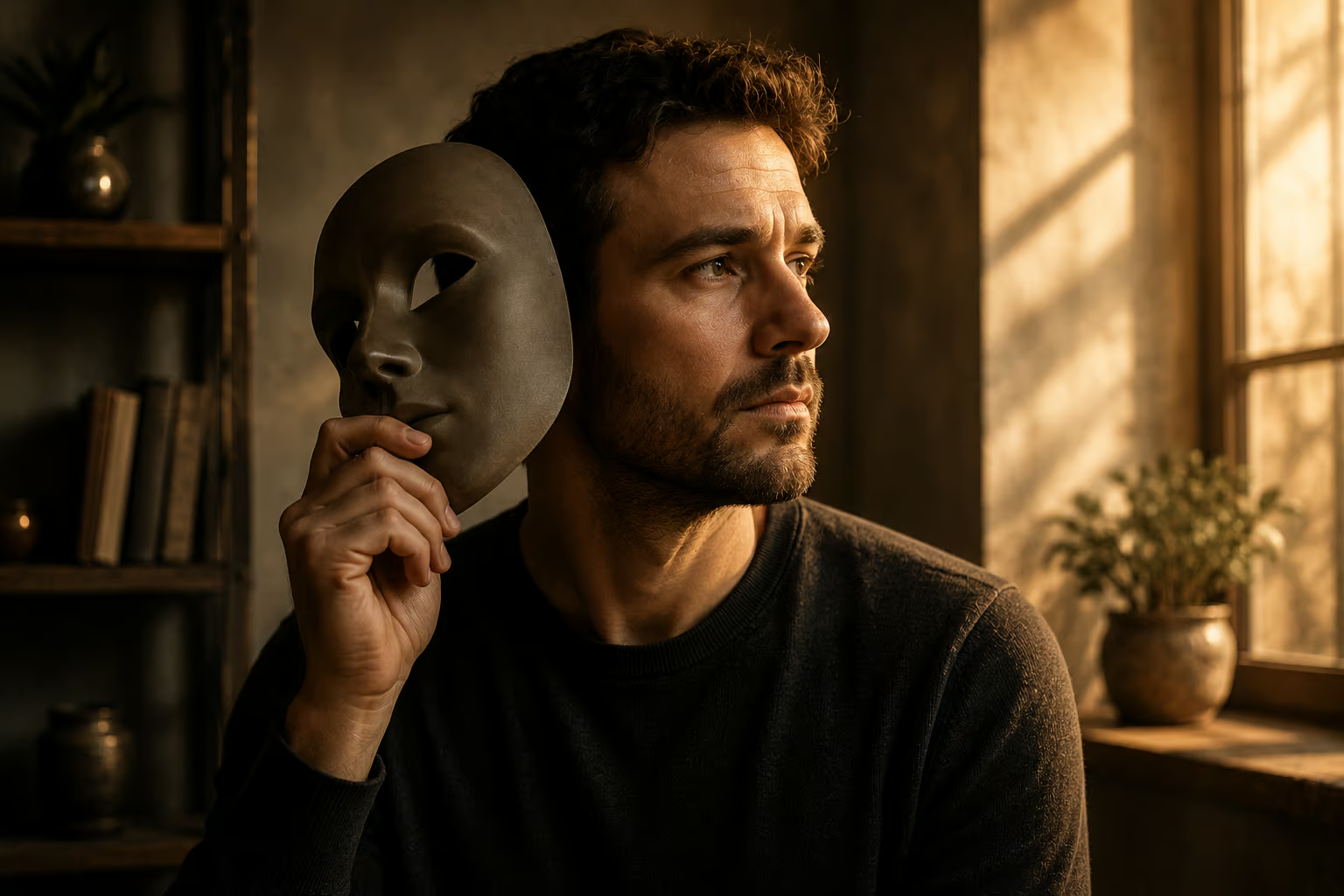
You may find yourself holding back parts of your personality, keeping certain thoughts to yourself or adjusting how you behave depending on who you’re with. Without even realising it, you become skilled at showing people the version of you that feels safest.
From the outside, this can look like confidence, fitting in or simply being easy-going. Underneath, it can create a quiet sense of disconnection because the person other people know is not always the person you truly are.
WHAT MAY REALLY BE HAPPENING
The longer you hide parts of who you are, the harder it becomes to remember that those parts were never the problem.
Most people are not born afraid of being themselves. Somewhere along the way, they learn that certain qualities, opinions, emotions or behaviours receive a better response than others. Adapting becomes a way of protecting relationships, avoiding criticism or reducing the risk of rejection.
Over time, that adaptation can become automatic. Authenticity starts being replaced by performance. Self-expression becomes filtered through what feels acceptable. This is often where identity, confidence, belonging and self-acceptance become closely connected. The more energy spent managing how you’re perceived, the less freedom there is to simply be yourself.
A DIFFERENT PERSPECTIVE
Being yourself does not guarantee that everyone will understand you, agree with you or approve of you.
What it does offer is something far more valuable: the chance to build a life, relationships and sense of identity that are based on who you really are rather than who you think you need to be. Genuine connection becomes much easier when people are connecting with the real person rather than the carefully edited version.
SOMETHING TO CONSIDER
What part of your personality do you find yourself hiding most often, and what would change if you stopped treating it like a problem?

